

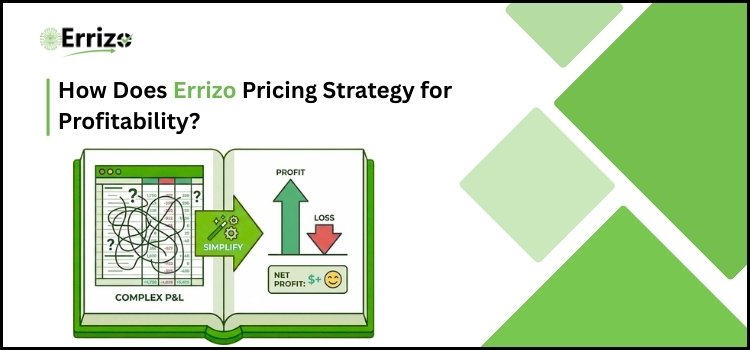
Why do some businesses rise in revenue yet fail to make profits? The answer is generally found in pricing. Setting the proper pricing entails more than just covering costs; it also requires a grasp of value, market dynamics, and financial sustainability.
In Errizo strategies, we help businesses begin pricing decisions by asking the right questions—because the answers often reveal where profitability is gained or lost. Such as, Are your prices aligned with your true costs? Do they reflect the value you deliver? Are discounts quietly reducing your margins? These questions shape Errizo’s pricing approach.
A systematic pricing strategy, based on financial clarity and market understanding, assists businesses in avoiding typical errors and establishing prices that promote profitability, stability, and long-term success, all without making pricing appear complicated or contrived.
Why Pricing Decisions Often Fail to Deliver Profitability
Many organizations see consistent revenue growth, but profitability remains questionable. Why is this happening? Typically, pricing decisions are made without a defined financial basis. Competitors, short-term market pressure, and the need to finish deals swiftly are all common factors that influence prices. These tactics may increase sales, but they rarely protect profits.
Another prevalent difficulty is making assumptions rather than using data. Businesses may underestimate costs, disregard indirect expenses, or give discounts without considering the long-term consequences. These decisions gradually erode profitability, even while demand appears to be high.
Pricing should not be reactive to market conditions. Without structure and financial certainty, organizations risk using pricing as a concession rather than a competitive advantage. Understanding why pricing fails is the first step toward establishing prices that promote long-term success.
Recent Post:- How Errizo Evaluates the ROI of Your New Business Venture
Understanding the Real Cost Behind Your Prices
Before setting prices, it’s critical to determine the total cost of your product or service. Many organizations focus solely on evident costs, but profitability requires a broader perspective. Here is how Errizo approaches it:
- Direct Costs: It includes raw materials, production labor, and any other expenses directly related to the creation of the product or service. While they are basic, they only cover a piece of the whole cost picture that pricing must address.
- Indirect Costs: Overheads such as utilities, rent, administrative salaries, and software subscriptions may not seem large individually, but together they can significantly impact profit if ignored in pricing decisions.
- Hidden or Variable Costs: Expenses like returns, warranty claims, delivery charges, or promotional discounts are often unpredictable. Failure to account for these might erode margins gradually over time.
- Break-even Awareness: Knowing the actual sales volume required to cover all expenditures prevents you from underpricing your goods. Without this, even great sales can fail to yield a significant profit.
- Margin Protection: After all costs have been addressed, raise your pricing to ensure a healthy profit margin. This ensures sustainability and aligns pricing decisions with long-term business objectives.
Why Errizo Starts With Questions to Build Profitable Pricing
Before making any pricing decisions, Errizo focuses on understanding the business from the inside out. By asking specific questions about costs, customer value, and discount policies, we can identify hidden profit leaks and opportunities. These inquiries do more than just collect data; they also influence strategy, assisting organizations in developing successful and sustainable pricing models.
1. Are prices aligned with actual costs?
Many businesses establish prices without completely comprehending all costs. Ensuring alignment with both direct and indirect expenses preserves margins from inadvertent erosion.
2. Do prices reflect the value delivered?
Cost-only pricing misses the market opportunity. Understanding what customers are willing to pay for your value helps capture profits fairly.
3. Are discounts quietly reducing margins?
Uncontrolled discounts can gradually eat into revenues. This guarantees that pricing is competitive while remaining profitable.
4. Could pricing support long-term goals?
Beyond immediate sales, pricing should take into account growth, scalability, and sustainability. Answering this maintains prices consistent with the overall strategy.
Also Read:- How Does Errizo Help Businesses Manage Growth
How Errizo Build a Structured Pricing Strategy That Protects Profit
After addressing the key pricing questions, Errizo takes action by developing a systematic pricing strategy. The goal is straightforward: set prices that cover costs, represent value, and optimize profitability without resorting to guessing. Here’s how we do it in detail:
1. Comprehensive Cost Analysis
We look at all costs, including direct production costs, indirect overheads, and unreported expenses like returns or promotions. Understanding each layer ensures that prices cover all expenses, preventing margin leaks that are typically overlooked in reactive pricing models.
2. Value Assessment
Price should represent the value perceived by customers rather than the cost of manufacturing. We examine the problems your product solves, the benefits it provides, and the distinctive differentiators that entice customers to spend extra, ensuring that pricing reflects true market worth.
3. Market and Competitor Review
Pricing does not exist in a vacuum. We assess rival pricing, market trends, and customer expectations to help you position your offering successfully. This guarantees that your prices are competitive enough to attract clients while maintaining profitability and business sustainability.
4. Profit Margin Structure
Target profit margins for each product or service are determined using cost and value analysis. This is not a fixed amount; it takes into account volume, sales strategy, and business objectives, ensuring that every price contributes to long-term financial health rather than short-term revenue spikes.
5. Strategy Validation
Prior to deployment, we conduct simulations and scenario testing to check price assumptions. This process helps organizations predict market reactions, discount impacts, and potential margin issues, allowing them to launch confident, profit-focused pricing without unforeseen shocks.
How to Set Prices Based on Customer Value and Market Expectations
Pricing is more than just covering costs; it is about capturing the genuine value your company provides while being competitive in the market. In our finance consulting services, we ensure that price decisions take into account both consumer perception and market positioning.
1. Understanding Customers’ Perception of Value
We assess how customers view your product or service, including its benefits, distinctiveness, and problem-solving capabilities. Pricing based on perceived value guarantees that customers believe the price is reasonable, while the company captures the full value of what it provides.
2. Segmenting Customers and Offerings
Not every buyer perceives the same value. We define segments based on their needs, willingness to pay, and behavior, and then develop unique pricing strategies for each. This prevents underpricing for high-value categories while maintaining competitiveness where necessary.
3. Competitive Market Analysis
We research competition pricing and positioning to better understand market expectations and gaps. This allows companies to deliberately position their pricing, making it appealing enough to attract customers while remaining profitable.
4. Balancing Price and Perceived Quality
Errizo ensures that pricing reflects quality accurately. Prices that are too low can reduce perceived value, whilst prices that are too high can decrease demand. The optimal balance maximizes income and profit.
5. Dynamic Adjustments to Market Changes
Markets develop, and customer perceptions shift. We provide pricing frameworks that allow for modifications without reducing margins, ensuring that prices remain consistent with value over time.
Choosing the Right Pricing Model to Ensure Long-Term Profitability
Selecting the right pricing model is critical to maintaining margins, supporting growth, and adapting to changing markets. A one-size-fits-all approach rarely works. Here’s how businesses can approach pricing model selection effectively:
- Cost-Plus Pricing for Simplicity and Coverage: This traditional strategy involves a markup on total costs. It ensures that every sale helps to cover expenses and maintain a consistent profit. Best for businesses that want stable profitability and uncomplicated offers.
- Value-Based Pricing to Maximize Profits: Prices are established based on the perceived value to the buyer rather than merely the cost. This strategy works well for products or services that have distinguishing qualities or great brand recognition, allowing businesses to increase profitability.
- Tiered or Segment-Based Pricing for Flexibility: Providing multiple price levels for different client segments or use tiers helps to maximize income. High-value clients pay more, while more price-sensitive sectors are still served, resulting in increased profitability.
- Subscription or Recurring Pricing for Predictable Revenue: Recurring models provide consistent cash flow while reducing dependency on one-time sales. This method is ideal for services or products that provide ongoing value while also facilitating scalability and long-term planning.
- Dynamic Pricing for Market Responsiveness: Adjusting prices based on demand, competition, or seasonality enables businesses to maintain competitiveness while protecting profits. Dynamic pricing necessitates close monitoring to avoid undermining client trust.
End note!
Pricing is more than just numbers; it is a strategic instrument that promotes profitability, growth, and long-term stability. Businesses may transition from reactive pricing to deliberate, profit-driven decisions by asking the appropriate questions, reviewing expenses, aligning prices with value, and selecting the correct model. Structured pricing strategies do more than just safeguard margins; they transform price into a competitive advantage that drives long-term business success.
A financial consultant can help organizations make better pricing decisions by providing expert counsel. Errizo offers specialized support to help match prices with costs, value, and market reality. Working with professional consultants guarantees pricing that is strategic, confident, and profitable.