
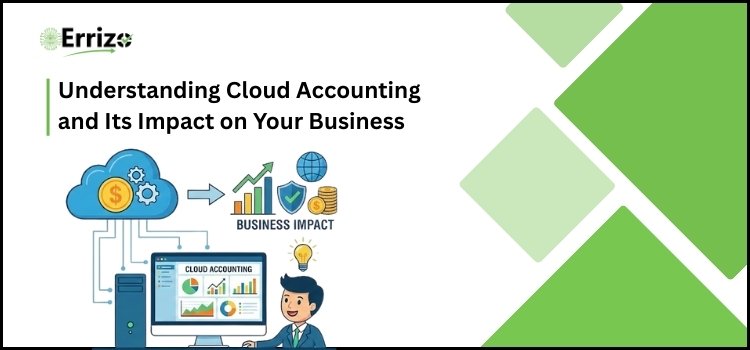
Cloud accounting has emerged as one of the most widely discussed trends in finance and accounting. Businesses of all sizes, from small startups to established corporations, are being pushed to migrate to the cloud, but what does this imply in practice? For many businesses, cloud accounting entails more than simply adopting internet software. It reflects a transformation in how financial data is accessible, managed, and used to inform smarter decisions.
Businesses receive real-time visibility into their accounts rather than relying on static reports and obsolete information. This transformation not only increases efficiency but also shifts accountants’ roles from record-keepers to trusted consultants. Understanding what cloud accounting genuinely implies is the first step toward effectively implementing it in your business.
Recent Post:- How Errizo Helps Businesses Gain Financial Clarity Without a CFO
What is Cloud Accounting?
Cloud accounting is the usage of accounting software that runs over the internet rather than being installed on a local computer or office server. This technology securely stores financial data in the cloud, which can be accessed at any time and from any location as long as there is an internet connection. Old accounting procedures, which often restricted data to a single device and necessitated manual updates, have significantly changed with the advent of cloud accounting.
Cloud accounting automatically updates transactions such as bank feeds, invoices, expenses, and payroll in real time. This decreases the need for human data entry and lowers the possibility of errors. Accountants and business owners can collaborate on the same set of financial data, ensuring that everyone has access to the most up-to-date information.
Popular cloud accounting platforms like Xero, QuickBooks Online, and Zoho Books include automatic software updates, data backups, and built-in security safeguards. As a result, businesses no longer have to worry about software updates or losing crucial financial data. Overall, cloud accounting is a more efficient, collaborative, and transparent approach to managing business finances..
What Cloud Accounting Really Means for Your Firm
Switching to cloud accounting is more than just adopting online software; it affects how your business runs on a daily basis. From client data management to routine task completion, cloud technologies have an impact on workflows, collaboration, and decision-making. Understanding these changes allows your company to take full advantage of technology, increasing productivity, accuracy, and client relationships.
1. Real-time access to financial data
Cloud accounting enables businesses to access up-to-date financial data at any time. Transactions are automatically recorded, allowing accountants to track cash flow, expenses, and income without waiting for reports or client submissions. This enables organizations to respond rapidly to financial challenges and provide timely advice.
2. Improved collaboration with clients
Because both the accountant and the client use the same cloud platform, communication becomes easier. There is less back-and-forth via email, and there are fewer problems caused by outdated files. Clients can also acquire a better understanding of their financial status.
3. Increased flexibility and remote working
Cloud-based technologies allow accountants to operate from any location with internet connectivity. This enables remote teams, flexible work arrangements, and uninterrupted service in unexpected scenarios.
4. Automate routine accounting chores
Automated tasks like bank feeds, invoice production, and expense tracking save time and effort. This not only saves time but also reduces the likelihood of human error.
5. Move toward advisory services
With everyday tasks completed more efficiently, businesses may focus on providing strategic insights such as forecasting, budgeting, and company planning, thereby bringing greater value to clients.
6. Scalability for growing businesses
As a business expands, cloud accounting platforms demonstrate exceptional adaptability, enabling the addition of new clients and users without necessitating complex system modifications.
Key Advantages of Cloud Accounting for Businesses
Cloud accounting delivers more than just convenience; it also has actual benefits that can change the way a business runs. These tools enable businesses to work smarter, not harder, by saving time on routine operations, boosting accuracy, and collaborating with clients. Understanding the primary benefits makes it clear why cloud accounting may boost growth and efficiency.
- Improved efficiency and production: Cloud accounting automates bank reconciliations and transaction updates, reducing the need for manual data entry. This enables accounting teams to finish tasks more quickly and focus on more vital operations.
- Cost savings in IT and infrastructure: Because cloud software is hosted online, businesses are not required to invest much in servers, software installs, or upkeep. The supplier handles updates and backups, which reduces IT costs.
- Improved data security and backups: Cloud accounting platforms include extensive security features such as encryption, backups, and access controls. This protects sensitive financial data and lowers the chance of data loss.
- Enhance customer interactions: Real-time access to financial data enables businesses to respond faster and offer more proactive advice. Clients feel more supported and assured when their accountant provides immediate insights.
- Scalable solutions for growing companies: Cloud systems can simply scale as a company grows. New clients, workers, and services can be introduced without causing significant disruptions or technological difficulties.
- Improved accuracy and compliance: Automated processes and built-in compliance measures assist businesses decrease errors and guarantee financial records match regulatory standards.
Also Read:- Pricing Strategies by Errizo
Is Cloud Accounting Right for Your Business?
While cloud accounting provides numerous benefits, it is not a one-size-fits-all solution. Before making the transfer, firms should consider their size, client needs, workflows, and long-term ambitions. Understanding whether cloud accounting is compatible with your company’s processes, growth ambitions, and technology readiness promotes a smoother transition and maximizes benefits for both your staff and your clients.
- Firm’s size and kind: Cloud accounting is especially useful for small to medium-sized businesses seeking flexibility and efficiency. However, larger businesses can benefit if they handle several clients or locations.
- Need for real-time financial analytics: If your company or clients rely on fast financial data to make choices, cloud accounting is an excellent fit. Real-time access increases accuracy and responsiveness.
- Willingness to adopt new technologies: Businesses that are willing to learn new tools and update workflows will receive the most value. Effective training and change management are essential for successful adoption.
- Client expectations and collaboration: Cloud accounting can help you meet your clients’ expectations for speedier communication, transparency, and digital access to their financial data.
- Remote or flexible working requirements: Businesses with remote teams or flexible work arrangements profit substantially from cloud-based systems because work is not limited to a physical location.
- Long-term growth plans: Cloud accounting systems allow businesses to scale without requiring large infrastructure modifications.
- Budget and cost considerations: Businesses must assess subscription fees, training, and prospective IT investments. While cloud accounting typically decreases infrastructure costs, the first move may necessitate budgeting.
- Security and compliance needs: Companies that handle sensitive financial data must ensure that the cloud provider meets regulatory and security requirements. This is particularly crucial in businesses with stringent regulatory standards.
- Integration into existing systems: Consider how well cloud accounting platforms interface with other tools that your company uses, such as CRM systems, payroll software, or reporting tools. Smooth integration minimizes workflow disruptions and increases efficiency.
Conclusion
Cloud accounting is more than simply online software; it represents a paradigm shift in how accounting companies manage data, connect with clients, and provide value. Real-time access to financial data, automation of mundane processes, and remote work support increase productivity and accuracy, allowing accountants to focus on higher-value consulting services.
Although cloud accounting involves careful planning, training, and security considerations, the long-term advantages are significant. Errizo offers professional accounting and financial consulting services to organizations that need experienced financial advice. Errizo provides personalized guidance and strategic insights to help companies achieve long-term growth in today’s modern-tech world.